A Variable Optical Attenuator (VOA) is a controllable device used to reduce the optical power traveling through a fiber or free-space optical path. Attenuators emulate signal loss, balance power levels, and protect sensitive devices during testing. These EVOAs provide attenuation of up to at least 25 dB, which can be. The NSAI series of NanoSpeed™ fiber optic attenuators uniquely feature large attenuation of 50dB, low optical loss, fast response, and high optical power handling. The. OZ Optics offers a complete line of low cost, compact PC board mountable motor driven variable attenuators with low backreflection.
An SC fiber optic attenuator is a simple yet essential passive component designed to reduce optical signal power to a controlled level. It is widely used in telecommunications networks, data centers, FTTH systems, and optical testing environments. It is designed specifically for use with SC (Subscriber Connector) fiber optic connectors, which are widely used due to their snap-in locking mechanism and. JKY supply SC female to male fiber optic attenuator and bulkhead SC fixed fiber optic attenuator. Attenuation values range from 1dB to 30dB.
Corning's fixed optical attenuators reduce the optical power within a given optical path without interfering or reducing the optical signal quality. Different types of attenuators operate. Thorlabs has a wide variety of single mode (SM), polarization-maintaining (PM), or multimode (MM) fixed and variable optical attenuators (VOAs). We offer SM and PM electronic VOAs that provide control of the output power with FC/PC or FC/APC connectors. The basic types of optical attenuators are fixed, step-wise variable, and continuously variable.
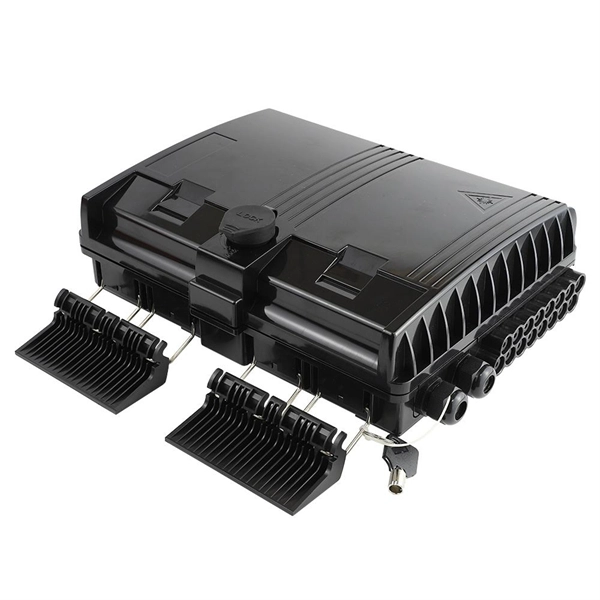
A fiber bypass switch (also called an optical bypass switch) is designed to keep network traffic running—even when the switch itself loses power or fails. It automatically creates a backup optical path to “bypass” the failed device. To protect the critical fiber optic network from power system failure, PLANET IFB-244 Series is an ultra-fast auto-recovering solution to prevent and maintain fiber network communication during power loss. This function is critical for maintaining uninterrupted service during maintenance, testing, or equipment failure. This technology effectively avoids single-point power failure in daisy chain topology or multi-point power. Industrial-grade fiber optic bypass switches can be installed in 100M/1G/10G fiber optic networks.
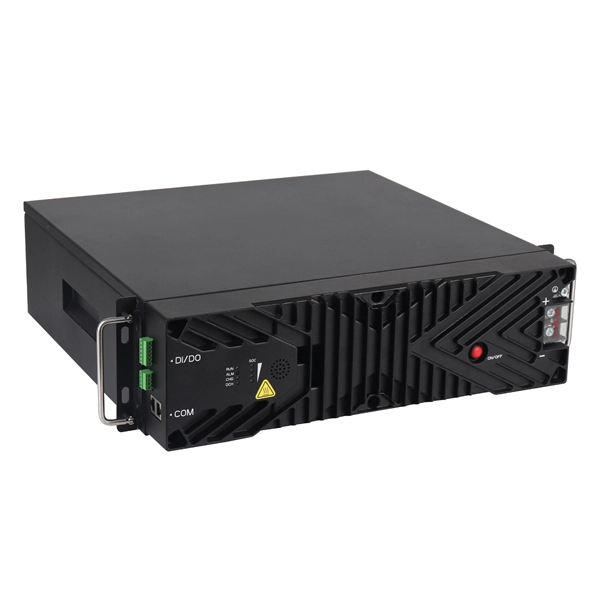
Optical fibers are an integral part of modern communication systems, enabling high-speed data transfer and reliable connectivity. They are thin, transparent strands of glass or plastic used to transmit light signals over long distances. Light acts as a carrier wave and can be modulated to carry information. Fiber is preferred. Recent advancements including coherent detection, optical amplification, and fiber-optic sensing are discussed, along with their impact on future networks.
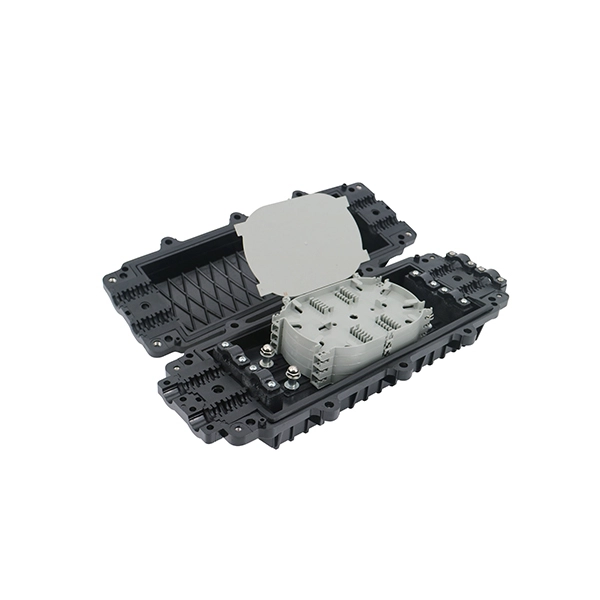
The cable is being developed by Desarrollo País, the state-owned company that develops infrastructure projects and H2 Cable, a subsidiary of Singapore-based BW Digital. A feasibility study estimates that construction of the cable will cost $400 million. The company specializes in advanced fiber optic telecommunications and is dedicated to deploying fiber optic networks throughout Chile, enhancing broadband access for consumers and businesses. Their extensive ultra-broadband network, built to high industry standards, supports the digitalization. The Humboldt Cable System is a 14810 km submarine cable connecting Chile, French Polynesia and Australia, with branches for the possible connection of other countries and territories. As of 2025, the plan is to build a 14,800-kilometre (9,200 mi) cable from Valparaiso, Chile, to. HFCL is recognized as one of the largest manufacturers and suppliers of fiber optic cable across the globe, providing high-quality products and reliable services. These projects offer opportunities to U. suppliers of fiberoptic and other.
[PDF Version]
Directional couplers are multiple-waveguide couplers used for codirectional coupling. They can be used in many different applications, including power splitters, optical switches, wavelength filters, and polarization selectors. We consider in this tutorial two-channel directional couplers, which. Mode division multiplexing (MDM) has provided a new trend in high capacity optical transmission systems.
For such cables, we recommend using at least a 1. It's important to consider not only the rigidity of the jacket but also the breakout point of the assembly, where the strands exit the jacket and are encased in. 8 core single mode fiber optic cable should be selected by fiber mode, core count, cable structure, jacket material, installation route, tensile strength, attenuation test, reel length, and quantity. Selecting the right conduit ensures the cable's longevity, prevents signal degradation, and supports efficient installation and maintenance. They feature low attenuation benchmarks 2 and minimal dispersion. They use OS1 or OS2 OS1 or OS2 classifications to. Understanding the physics behind Single Mode vs Multi‑Mode Fiber is essential for selecting the right conduit for any optical network. Single‑mode fiber (SMF) employs an ultra‑narrow core—typically 8 to 10 µm in diameter—that permits only one propagation mode.
[PDF Version]
Optical transceiver interoperability refers to the ability of transceiver modules from different manufacturers to function correctly with a range of networking equipment—switches, routers, servers, and optical transport gear—without compatibility issues. This guide dives deep into the core aspects of optical transceiver compatibility, common. When it comes to the connection between two fiber optic transceivers, the following four factors should be taken into considerations: wavelength, speed, fiber type, and the connection to switches. In a fiber link, the data is transmitted from one end to another, and fiber transceivers are. Several years ago, hyperscale network operators saw an opportunity for coherent Dense Wavelength Division Multiplexing (DWDM) transport optics to plug directly into routers for 400 Gbps Data Center Interconnections (DCIs) with reaches up to 120km. This point-to-point, IP-over-DWDM architecture. MSA (Multi-Source Agreement) standards define the mechanical, electrical, and management interfaces of optical transceivers, enabling multi-vendor interoperability, supply chain flexibility, and large-scale network deployment.
[PDF Version]
Huawei OptiXstar P813E-E is an Optical Network Unit (ONU) with eight GE ports that support Power over Ethernet (PoE) and Power over Ethernet Plus (PoE+), delivering high-quality voice, data, and High-Definition (HD) video services. Use this guide to learn about the Juniper Networks® 800G optical transceivers and cables, their specifications, and how to install, remove, and maintain these transceivers. Not all these need to be fully delivered for data center operators to benefit from 800G upgrades. 7 Billion in 2024 and is projected to reach USD 1. The optical network unit (ONU) market in South Korea has witnessed substantial growth in recent years, driven by. Delivering up to 800 Gbps of bandwidth, Orion provides the performance that will effectively allow coherent pluggable modules to be used across most—if not all—optical spans in today's telecommunications networks. On the other hand, the market needs are not only for higher capacity but also. In an 800G coherent link, each wavelength transmits around 800 Gb/s by increasing symbol rates or using advanced modulation, enabling terabit-level capacity per fiber.
[PDF Version]Contact us for competitive quotes on any of our power communication and smart grid products
Get a Quote