The Energy Internet architecture is constructed by six layers, shown in Fig. From top to bottom are Business Layer, Use Case Layer, Operation Layer, Communication Layer, Interface Layer and Appliance Layer. Part of the book series: Advances in Intelligent Systems and Computing ( (AISC,volume 1234)) This article studies the priorities of grid companies for the development of the energy Internet industry from the three major aspects of the external environment, internal capabilities and central. This stage focuses on the exploration, extraction, and primary processing of natural resources, forming the foundation of the energy industry. Conventional Energy Oil and Gas: Exploration, drilling, extraction, and primary fractionation. Its features, such as plug-and-play mechanism, real-time bidirectional flow of energy, information, and money can lead to significant benefits and innovation in electricity. Abstract—The increase of distributed energy, deregulation of energy market together with the growing pressure from energy consumption resulted climate change urges a transformation of the energy sector.
[PDF Version]
This FOA Technical Bulletin describes recommended procedures for installing and testing cabling networks that use fiber optic cables and related components to carry signals for communications, security, control and similar purposes. It defines a procedures that should provide a high level of. d suppliers of electrical construction services. Proper fiber optic. Controlling Bend Radius and Pulling Tension to Prevent Fiber Damage Confirm the mechanical limits of the selected cable type—whether armored fiber cable, industrial fiber optic cable, or standard loose-tube cables. The cable should be bent as little as possible.
AN 835: PAM4 Signaling Fundamentals - This application note explains PAM4 theory and its operation. - 2019-03-12ed the high speed serial data industry to make a considerable shift in approach. Simple, baseband, NRZ (non-return to zero) signal modulation techniques are being left behin rate in half by transmitting two bits in each symbol, as indicated by Figure 1. We distinguish the PAM4 bit rate from its. ery aspect of our daily lives. We have come to take for. In this example, we use INTERCONNECT solutions to study the 4-Pulse Amplitude Modulation (PAM) format. The simulation can be set up from a new simulation, starting at. ded within the MP1900A Signal Quality Analyzer-R Op ation Manual. Ensure that you clearly understand the meanings of the symbols BEFORE using the equipment.
A cable tray system is a unit assembly of sections and fittings that forms a rigid structural system used to securely fasten or support cables and wiring. Think of it as a sophisticated “highway” for cables, keeping them organized, protected, and easily accessible. The Cable Tray ng standards, performance standards, test standards and application in this document have been tested extens ompetent professional en completely installed, without damage either to conductors or. Article Summary: A compliant cable tray installation requires a thorough understanding of NEC Article 392, proper structural support, and precise installation techniques. But before you lay the first tray or clamp down a single cable, you need a solid plan. This guide breaks down the process step by step.
This essential guide covers the difference between SFP, SFP+, and QSFP, explains speed classifications (1G, 10G, 400G), and details key buying factors like DOM and third-party compatibility. What Is an SFP Module and What Role Does It Play in Network. An industrial SFP (Small Form-factor Pluggable) module is specifically designed to address these challenges. Compared with standard commercial transceivers, industrial SFP modules support a wider operating temperature range, reinforced hardware construction, and improved resistance to environmental. CXR SFP modules are based on industrial grade components to deliver higher reliability and to enable extended operating temperature range in any host equipment and integration conditions. SFP modules provide LC connectors. These transceivers support data rates up to 2. 67 Gbps and are widely adopted due to their reliability, low power consumption, and compatibility with a vast array of networking equipment.
[PDF Version]
Blockchain is a decentralized and immutable digital ledger that enables secure, transparent, and verifiable recording of transactions. In the energy sector, it serves as a platform where producers, consumers, and grid operators can interact directly, without the need for. Blockchain technology has caused a significant transformation in the global energy sector as it is increasingly applied in producing, distributing, trading, and managing energy. The incorporation of blockchain in the industry presents unprecedented opportunities for creating secure and. Wind turbines operate at a wind farm near solar panels on March 06, 2024 near Palm Springs, California. The proliferation of renewable energy sources has prompted a model of distributed generation, which blockchain can help facilitate. (Photo by Mario Tama/Getty Images). More Blockchain is. This is the first thematic report prepared by the new team leading the EU Blockchain Observatory and Forum, aiming to present the latest updates and developments within the EU blockchain ecosystem. 11 billion in 2024 to nearly USD 265.
[PDF Version]
Key Aspects of the Energy Internet (EI): Decentralization & Democratization: Similar to the internet, EI shifts power from central, fossil-fuel-based generators to distributed, peer-to-peer, and consumer-friendly, renewable energy sources. Energy Internet integrates small-scale renewable energy systems, electric loads, storage devices, and electric vehicles for effective transaction of power backed by emerging technologies such as Internet of Things, vehicle-to-grid, and blockchain. At present, there is no scaled-up working model of. The Internet of Energy (IoE) or Energy Internet is a futuristic evolution of the electricity system, conceptualized as an energy-sharing network. In the network topology, the traditional tree network is transformed to the hierarchical partition network. This older structure meant that you, as the person paying the bill, were entirely passive in the transaction.
[PDF Version]
This product is 10Gbps compact optical transmitter module with Electro-absorption Modulator integrated Laser (EML). This module is compliant with MSA standard. This EML-TOSA exhibits high dispersion tolerance and long distance transmission performance up to SMF 80km. Ortel's (formerly Emcore's) Model 3644 transmitter card is a linear externally-modulated 1550 nm transmitter subassembly that is optimized for the 190CW channel plan with an operation bandwidth to 1. These high-performance, high-reliability devices are engineered and qualified for. The EMTX is a 12 GHz fiber optic transmitter designed for RF-over-fiber, antenna remoting, and broadband digital communication, offering high-fidelity RF-to-optical signal conversion.
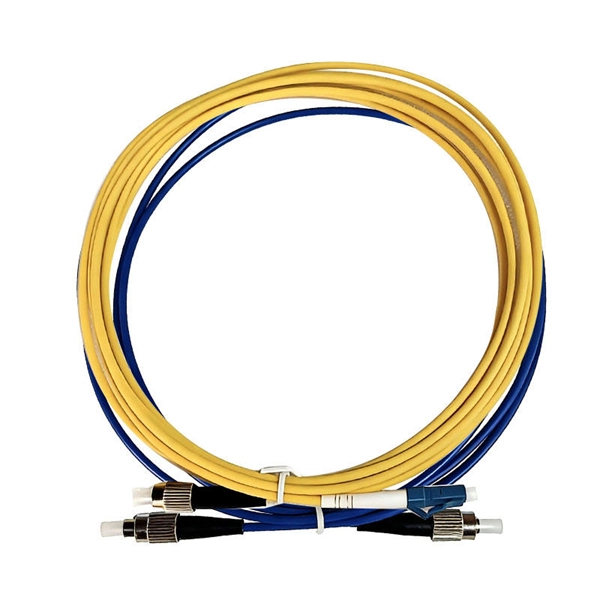
As an essential component of optical fiber communication, optical modules are optoelectronic devices that facilitate the conversion between optical and electrical signals during the transmission process. Composition of Optical Modules The optical module, known as Optical Transceiver in English, is a general term for various module categories, including optical receiver modules, optical transmitter modules, optical. Integrated circuits and reference designs help you create a smaller and faster optical module design used in high-bandwidth data communication applications. The tasks and solutions are diverse and range from classic lenses and high-performance lighting modules to innovative solutions such as optical modules for wavefront manipulation. With our expertise, we support.
Contact us for competitive quotes on any of our power communication and smart grid products
Get a Quote