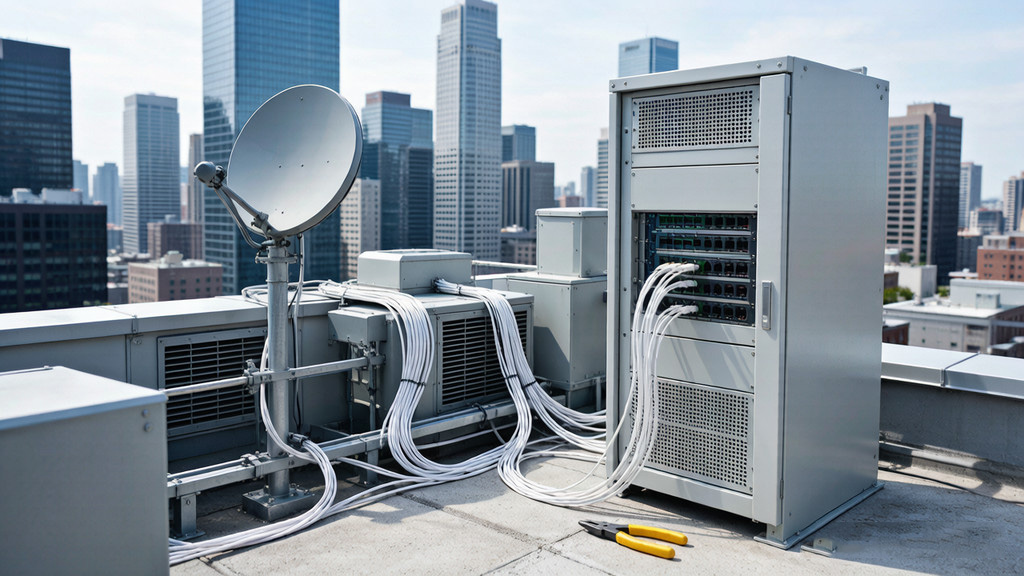
Begin by routing each fibre patch cable through the designated cable pathways. Use structured systems like cable trays, ducting, or raceways to prevent clutter and protect fibres from damage. Correct patch-cord installation is essential for maintaining low insertion loss, stable return loss, and long-term reliability in both indoor and outdoor fiber networks. Proper handling, routing, cleaning, bend-radius management, and connector alignment ensure that the optical link meets design. Incorrect routing, contamination, or physical stress on a fiber optic cable can result in attenuation, signal loss, and even complete link failure. According to data from NS Comm's Fiber Performance Lab (2024 Q4 Test Report), poor installation practices can cause up to 2. 5 dB additional signal loss. Proper cable routing, clean connector mating, and adherence to bend radius guidelines aren't optional—they're essential for sustaining long-term network performance and infrastructure lifespan. Ground Outlet: Cables enter inside the rack from the bottom, meaning the patch panel should be mounted in the lower part inside the rack.
[PDF Version]
PVC fiber optic patch cords are recommended for indoor use; LSZH cables are more suitable for public applications, and OFNP cables are used for installation in ducts and plenums. Simplex: Simplex has only one fiber optic cable and one fiber optic connector at each end. ZION Communication supplies both standard patch cords and custom assemblies to match your equipment, distance, and installation. A fiber optic cable is a transmission medium that uses strands of glass or plastic fibers to carry data as pulses of light. It offers high bandwidth, low signal loss, and resistance to electromagnetic interference (EMI), making it ideal for modern high-speed networks. Behind its slender appearance lies the fusion of core types, connector types, and polish levels, each chosen for a specific application. It can be. In a modern data center, every high-speed optical link depends on the right fiber patch cable.
[PDF Version]
The golden rule: Every cable entering the server rack lands on a patch panel before it gets to the switch. Not all Ethernet cables are created equal. For modern server rooms, at minimum install Cat 6A (Category 6 Augmented) rated cable for 10 Gbps transmission rates up to 100 meters. Table of Contents What are DAC and AOC Solutions? The cabling in a server room or data center is the central nervous system of your IT. According to TIA/EIA-568-D standards, structured cabling—including patch panels—is essential for consistent performance in commercial buildings. Troubleshooting. Fiber Optic Patch Cord: (also known as Fiber Jumper) means that both ends of the optical cable are equipped with the connector to realize the active connection of the optical path; one end with the connector is called the Fiber Optic Pigtail. Fiber optic patch cords are jumpers from equipment to. When cables used for connectivity are a mess, routine maintenance becomes a high-risk operation, and troubleshooting a single bad network connection can trigger hours of costly downtime.
[PDF Version]
The MPO-MPO-OM3-8core/12core is a high-performance, factory-terminated MPO/MTP fiber optic patch cord engineered for modern high-density data center networks and enterprise backbone applications. Built with laser-optimized OM3 multimode fiber (50/125 µm), this cable delivers exceptional signal. Designed to unleash high-speed data center capabilities, MPO Cable Assemblies and Adapters use high-density MTP and MPO-style connectors to deliver streamlined connectivity, high port density, superior loss performance and simplified maintenance for the high-bandwidth networks of tomorrow. Data. When you look at 8, 12, 16, and 24 fiber MPO connectors, you can see they have different numbers of fibers and designs. Each one is good for different network jobs. The number of fibers changes how you set up your network and how much you can grow it later. Our patchcords are fully customizable to meet specific customer requirements. Enter the MPO fiber patch cord.
[PDF Version]
This document outlines the procedure recommended by Panduit for field permanent link loss testing of multimode and singlemode structured cabling systems. It simply means a reduction in optical power, for example the loss caused by a component or an entire cable. The component could be a length of fiber, a splice, a connection made between two connectors or a passive component like an. FOA "Quickstart Guides" are short, simple guides to basic fiber optic tests. References to FOA "1. Launch Fibers are packaged in a rugged, convenient zipper case, designed for use with our T-Pak magnetic / hanger / hook and loop strap. Also known as launch packs or Dead Zone Eliminators used for OTDR (Tier II) testing Fluke Networks Test Reference Cords and Launch Fibers with LC connectors. This Applications Engineering Note (AEN 135) explains and recommends standard measurement methods for characterizing optical fiber system performance.
[PDF Version]
Each plastic optical fiber cable utilizes polymethyl methacrylate (PMMA), which has a core diameter far larger than traditional glass fiber—often up to 100 times larger—permitting greater light acceptance and simplified alignment during installation. Fiber optic patch cords are critical components in optical communication systems, facilitating seamless equipment connectivity. Q2: What are the advantages of plastic optical fiber (POF) in industrial. A fiber-optic cable, also known as an optical-fiber cable, is an assembly similar to an electrical cable but containing one or more optical fibers that are used to carry light. The optical fiber elements are typically individually coated with plastic layers and contained in a protective tube. Unisol Plastic Optical Fiber (POF) patch cables are engineered to deliver reliable short-distance data transmission using a durable and flexible plastic optical fiber cable. At Gcabling, our advanced manufacturing and strict quality control processes ensure.
[PDF Version]
Patch panels serve as the backbone of structured cabling systems, providing a centralized point for organizing and connecting network cables. In a data center, cross-connection refers to the use of additional patch panels that mirror the ports of connected equipment, essentially creating a separate patch area where any equipment port can be connected to any. The patch panel and Ethernet switch play pivotal roles in connecting all devices within a data center. Below is a front and back view of an installed patch panel. It also organizes devices that comprise a network by managing the flow of incoming and outgoing data through its ports to various servers and switches. Each of its ports is associated with a distinct cable. Poor patch panel cable management doesn't just make racks look messy — it silently drains operational budgets through extended MTTR (Mean Time To Repair), thermal inefficiency, and failed audits. This guide distills field-tested techniques from hyperscale deployments and enterprise campuses.
[PDF Version]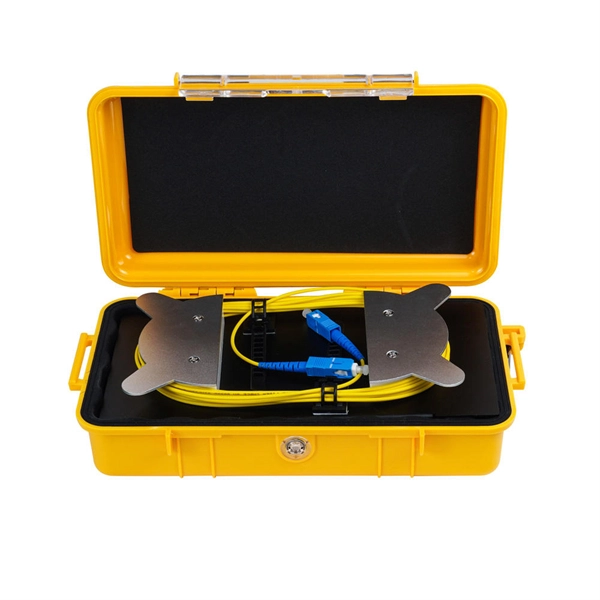
Yellow Fiber Optic Patch Cord: The cable or its connectors are yellow, commonly associated with single-mode fiber, indicating its high transmission capacity and long-distance transmission characteristics. Perfect for fast, error-free termination in your ODF or splice closures. Available in OS2/OM3/OM4 at factory-direct wholesale pricing. Single-mode patch cords are for long-distance routing and multimode cords are for shorter distance, higher bandwidth routing. Patch cords. This guide decodes the crucial color codes on fiber optic cable jackets, patch cords, and connectors (UPC, APC, MPO), linking visual cues directly to performance standards (OM4, OM5, OS2). The most critical piece of performance data on your 400G network doesn't come from an OTDR trace—it comes from. The Polyphaser FPC1FCFC-0SMRY20-05 is a FC to FC Simplex 9/125 single mode 2. The following definition of “standard” can be found in the ISO/IEC Guide 2:1996, definition 3. 2: 'A document established by consensus and approved by a recognized body.
[PDF Version]
A fiber-optic patch cord is a cable capped at each end with connectors that allow it to be rapidly and conveniently connected to equipment. This is known as interconnect-style cabling.
Contact us for competitive quotes on any of our power communication and smart grid products
Get a Quote