
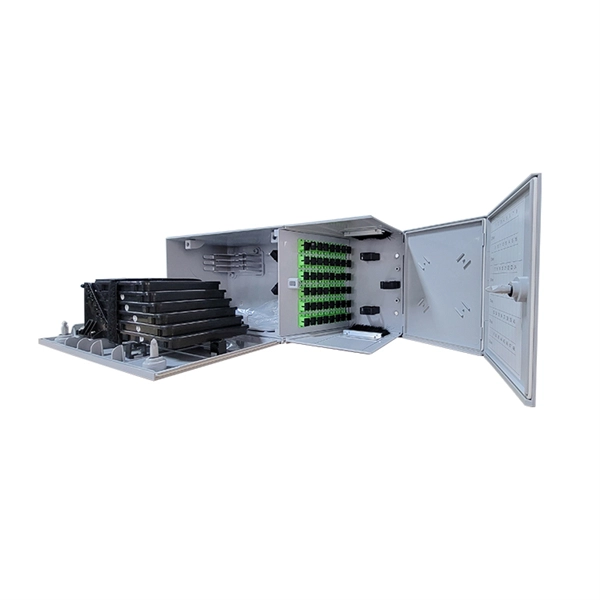
This FOA Technical Bulletin describes recommended procedures for installing and testing cabling networks that use fiber optic cables and related components to carry signals for communications, security, control and similar purposes. It defines a procedures that should provide a high level of. d suppliers of electrical construction services. Proper fiber optic. Controlling Bend Radius and Pulling Tension to Prevent Fiber Damage Confirm the mechanical limits of the selected cable type—whether armored fiber cable, industrial fiber optic cable, or standard loose-tube cables. The cable should be bent as little as possible.
The S7700 series provide service optimization features like wired and wireless convergence, unified user management, quality awareness (iPCA), H-QoS, and united security. They provide 100 GE ports, support SVF 2. 0, and have superb scalability and reliability. An active optical cable (AOC) is a fixed-length optical fiber with optical modules at both ends. It can be directly connected to an optical port on a device. Table 8-7 lists the models and attributes of. This document is intended for network engineers responsible for network design and deployment. The S7700 design is based on Huawei's intelligent multi-layer switching technology to provide intelligent service optimization methods, such as MPLS VPN, traffic. S7700 What's New Contents Issue 15 (2025-04-09) Copyright © Huawei Technologies Co.
A pigtail is used to provide fiber optics with a connector. This creates a stable and reliable. Fiber pigtails are simple in appearance, yet essential in function. They are the bridge between fiber optic cables in the field and the equipment or patch panels that manage them. Get the wrong connector type, the wrong polish, or skip proper fusion splicing technique—and you're looking at elevated signal loss, increased back reflection, and a. A fiber optic pigtail is a short optical fiber cable that has a connector on one end and an exposed (unterminated) fiber on the other.
An uplink port generally means a port used that connects toward the core of the network. In this particular usage, the switch's downlink ports are dual speed copper ports. RJ45 ports serve access-layer copper connections; SFP/SFP+ ports enable flexible 1G/10G uplinks; SFP28 delivers 25G for modern data centers; QSFP+ and QSFP28 support high-density 40G/100G spine–leaf. So, the uplink port connects the switch to other switches or “higher” layer routers. Switch normal ports, also known as. The SFP port is commonly found on Gigabit Ethernet switches and is primarily used for fiber optic device connections or for uplinking 1G switches to aggregation/core layer devices, providing higher-bandwidth links. Switch port type should be configured according to the requirement considering the factors like network architecture, speed and. Cisco switch ports are categorized by their physical hardware interfaces (such as RJ45 copper, fiber-optic SFP uplinks, and console ports), their bandwidth speed capacities (Gigabit, 10G, 100G), and their logical operating modes.
[PDF Version]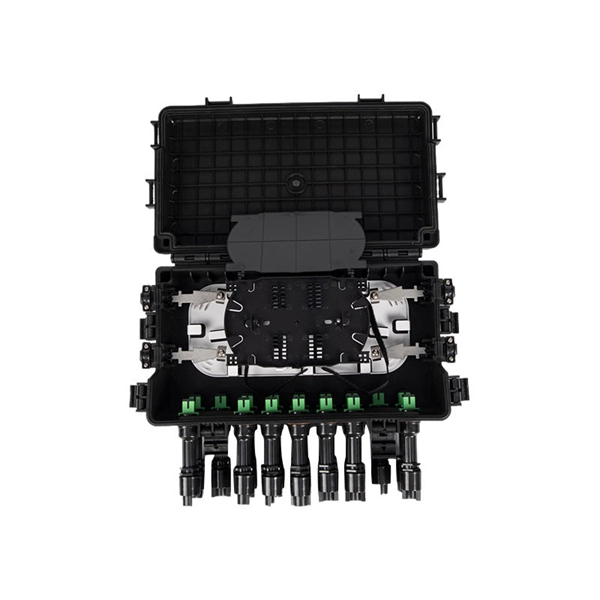
Through-beam photoelectric sensors consist of an emitter and a receiver in separate housings. The emitter sends a beam of light to the receiver, which determines a target is present when the beam is interrupted. All information about the E20827 at a glance. We assist you with your requirements. ✓ Technical data ✓ Mounting and Installation Instructions ✓ CAD drawings ✓ Compatible AccessoriesA Fiber Sensor is a type of Photoelectric Sensor that enables detection of objects in narrow locations by transmitting light from a Fiber Amplifier Unit with a Fiber Unit. INTRINSIC FIBER OPTIC SENSORS: In such type of sensors, sensing takes place within the fiber itself. These type of sensors have their dependency on the optical fiber properties itself to convert an environmental action into a modulation of the light beam passing. Through-beam sensors: Through-beam sensors detect when an object interrupts the light beam between the transmitter and receiver. Light emitted from the transmitter is aimed directly at the receiver.
[PDF Version]Contact us for competitive quotes on any of our power communication and smart grid products
Get a Quote